For the first eighteen months of running my blog, I was the definition of a content hamster wheel.
Write post. Publish post. Share on social media. Get a small spike of traffic. Watch it die. Repeat.
My monthly pageviews were stuck somewhere between 8,000 and 12,000 for what felt like forever. My AdSense revenue was embarrassing — we’re talking $40 to $80 a month. I was putting in real hours and getting almost nothing back for it.
I wasn’t lazy. I was just doing everything manually, without any real system, and without understanding what Google actually wanted from my content.
Then I started experimenting with AI tools — not to replace my writing, but to fix the invisible problems that were keeping my traffic flat. Within eight months my monthly sessions crossed 90,000. My ad revenue went from under $100 to over $1,100 a month. And I was publishing less content than before, not more.
This is what actually changed.

The Real Problem Most Bloggers Have
Before getting into tools and tactics, let me name the actual problem — because most bloggers are solving the wrong thing.
They think the problem is not writing enough content. So they write more posts. Traffic stays flat. They think the problem is not sharing enough on social media. So they post more. Still flat.
The real problem is almost always one of three things. Either they’re targeting keywords nobody is searching for, their content isn’t structured in a way Google understands and rewards, or their existing posts are sitting there with fixable problems that are quietly killing their rankings.
AI tools, used correctly, help you diagnose and fix all three of those things faster than any manual process ever could.
Where AI Actually Moves the Needle for Bloggers
Keyword Research That Goes Deeper
Old way of doing keyword research — type something into Google, check the search volume on a free tool, guess whether you can rank for it, write the post.
The problem is that surface-level keyword research misses the actual intent behind searches. Someone typing “best running shoes” might want a comparison list. Someone typing “are expensive running shoes worth it” wants an opinion piece with personal experience. Write the wrong format for the keyword and you’ll rank poorly even if your content is good.
Tools like Surfer SEO, Clearscope, and even a well-prompted AI assistant help you understand not just what people are searching but what kind of content is satisfying that search. I started running every target keyword through Surfer before writing and it completely changed how I structured posts.
Finding Content Gaps in Your Existing Posts
This was the biggest win I had and I didn’t expect it.
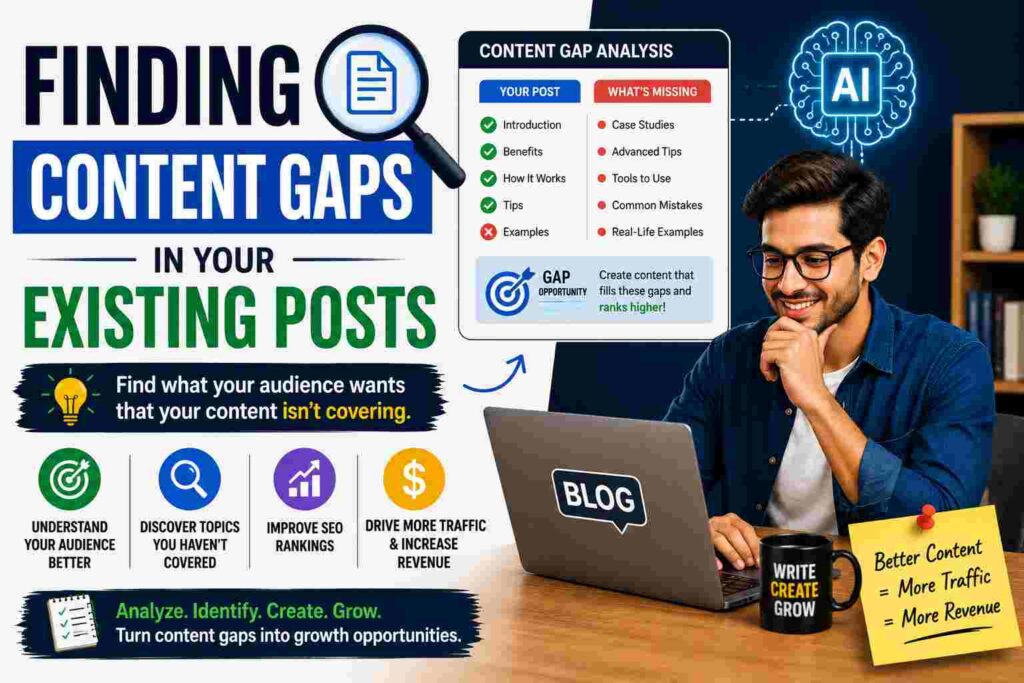
I used Claude to analyze my ten lowest-performing posts — I pasted the content in and asked what topics a reader would expect to find in this article that aren’t here. The gaps it identified were obvious in hindsight. Posts that were missing sections, questions that readers clearly had that I hadn’t answered, related topics I’d ignored completely.
I spent three weeks updating old posts based on this analysis rather than writing new ones. Six of those ten posts moved to the first page of Google within two months. Traffic from existing content nearly doubled before I’d published a single new article.
Updating old content is the most underrated traffic strategy in blogging and AI makes the audit process ten times faster.
Writing Better Headlines and Meta Descriptions
I used to spend twenty minutes agonizing over headlines. Now I generate fifteen options with AI in about two minutes, pick the strongest two or three, tweak them slightly, and move on.
More importantly, I use AI to write meta descriptions that actually get clicked. Most bloggers treat meta descriptions as an afterthought. But a well-written meta description is essentially a free ad in Google search results. It doesn’t affect rankings directly but it absolutely affects how many people click through to your post.
Higher click-through rate signals to Google that your result is satisfying searchers, which over time does help your rankings. It’s a slow but real compounding effect.
Content Briefs Before Writing
This changed my writing process more than anything else.
Before I write any new post now, I use AI to build a detailed content brief. That includes the main keyword, the related questions people ask, the subtopics competitors are covering, the ideal structure for the post, and the specific things I need to include to make the content genuinely better than what’s already ranking.
Writing from a thorough brief is like driving with GPS versus driving from memory. You still do the driving — the AI just makes sure you don’t miss the important turns.
My average post quality went up significantly and my time spent on each post actually went down because I wasn’t staring at a blank page wondering what to write next.
Internal Linking at Scale
If you have more than fifty posts on your blog, your internal linking is probably a mess. Most bloggers link internally by memory — they remember a related post exists and drop a link in. Which means newer posts get fewer internal links, older posts have links going nowhere useful, and the whole thing is inconsistent.
I used AI to audit my internal linking by feeding it a list of my posts and asking it to identify which posts should logically link to which others based on topic relevance. Then I spent a few days implementing those links.
Internal linking is one of the clearest signals you can send Google about which content on your site is important and how your topics relate to each other. Fixing it properly made a noticeable difference in how my site’s authority was distributed across pages.
The Ad Revenue Side of the Equation
More traffic is the obvious path to more ad revenue. But traffic quality matters just as much as volume.
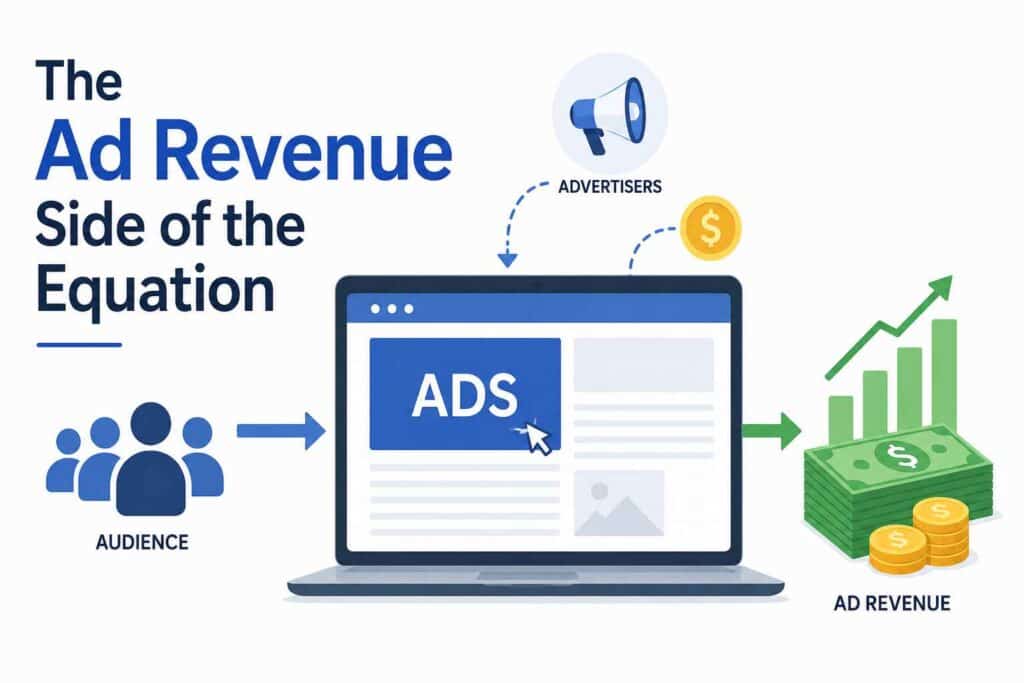
When I was getting 10,000 monthly sessions from random social media spikes, my RPM — that’s revenue per thousand pageviews — was around $4 to $6. Mostly people scrolling past on phones who weren’t really reading anything.
When I shifted to organic search traffic through better SEO, my RPM jumped to $12 to $18. Search traffic converts better because those visitors are actively looking for something. They read more, they stay longer, and advertisers pay more to reach them.
AI helped me identify which of my posts were attracting high-intent search traffic versus low-quality traffic. I doubled down on the topics and formats that brought in readers who actually engaged with the content.
The other thing I did was move from AdSense to Mediavine once I crossed 50,000 monthly sessions. Mediavine’s ad optimization is significantly better and the RPM difference is substantial — I went from around $14 RPM with AdSense to $28 to $35 RPM with Mediavine on similar traffic. If you’re serious about ad revenue, that threshold is worth working toward.
Step-by-Step: How to Use AI to Grow Your Blog Traffic
Step 1: Audit your existing content first
Before writing anything new, go through your ten to twenty lowest-performing posts. Paste each one into Claude or ChatGPT and ask: “What important questions or subtopics is this article missing that someone searching for this topic would expect to find?” Make a list of gaps for each post.
Step 2: Update before you create
Spend at least two to three weeks updating old posts based on your audit before publishing new content. Add missing sections, answer unanswered questions, improve the introduction, update any outdated information. This alone can generate significant traffic gains from content you’ve already invested time in.
Step 3: Build content briefs for every new post
Before writing any new article, use AI to create a detailed brief. Include the primary keyword, related keywords, questions from Google’s “People Also Ask” section, what competitors are covering, and a proposed structure. Only start writing once the brief feels thorough.
Step 4: Use Surfer SEO or Clearscope during writing
These tools analyze the top-ranking pages for your target keyword and tell you what topics, terms, and questions your content needs to cover to be competitive. They’re not cheap but they pay for themselves quickly if you’re serious about ranking.
Step 5: Fix your internal linking
List all your posts in a spreadsheet. Use AI to suggest logical internal linking connections between them based on topic. Spend a day or two implementing those links throughout your site.
Step 6: Optimize your meta descriptions
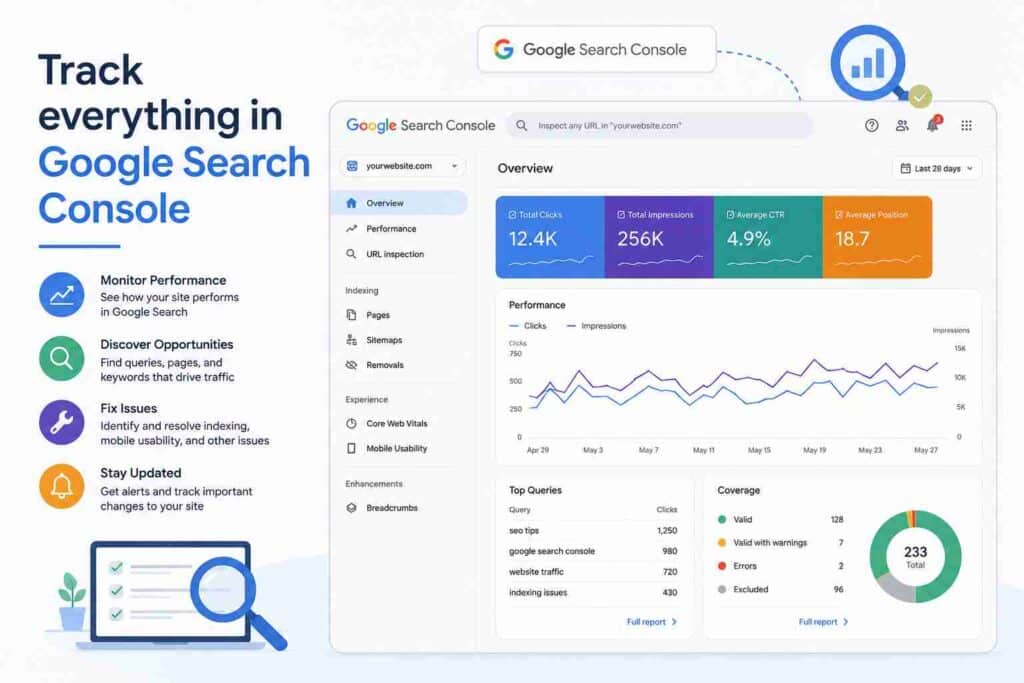
Go through your top twenty posts by impressions in Google Search Console. Find the ones with high impressions but low click-through rate — these are your biggest opportunities. Rewrite the meta descriptions using AI to make them more compelling and click-worthy.
Step 7: Track everything in Google Search Console
Check your Search Console data weekly. Look at which queries are bringing impressions but low clicks — those are opportunities to improve titles and metas. Look at which pages are ranking on page two — those are candidates for content updates to push them to page one.
Mistakes That Keep Bloggers Stuck
Publishing AI content without editing it. Google is getting better at identifying thin, generic AI content. More importantly, readers can feel when something lacks a real human voice. Always rewrite, add personal experience, and inject your perspective.
Chasing high-volume keywords too early. A new blog trying to rank for “best laptops 2026” is going to lose to sites with years of authority. Target low-competition, specific keywords first and build from there.
Ignoring page speed and mobile experience. AI can help your content but if your site loads slowly or looks bad on phones, none of it matters. Run your site through Google PageSpeed Insights and fix what it flags.
Not building topical authority. Random posts on random topics don’t build authority with Google. Pick three to five core topic clusters and publish deeply within those. AI can help you map out a full content cluster before you start writing.
Expecting results in thirty days. SEO takes time. Most of the changes I made took two to four months to show up meaningfully in traffic. Stay consistent and trust the process.
Something Worth Being Honest About
AI has genuinely changed what’s possible for individual bloggers. Things that used to require an SEO agency or a full content team — proper keyword research, content audits, briefs, optimization — are now accessible to one person with a laptop and a few smart tools.
But the blogs winning with AI are the ones where a real person with genuine knowledge and experience is still driving the content. The AI handles the research and structure. The human provides the insight, the voice, and the perspective that actually makes readers come back.
The moment your blog becomes entirely AI output with no real human angle, you’ve built something that’s easy to copy and hard to defend. Your actual experience and opinions are the one thing AI can’t replicate. That’s your moat.
Use AI to work smarter. Keep showing up as yourself in the content. That combination is genuinely hard to beat.
Results will vary based on your niche, competition level, domain age, and consistency of effort. SEO is a long game — treat it like one.