Introduction
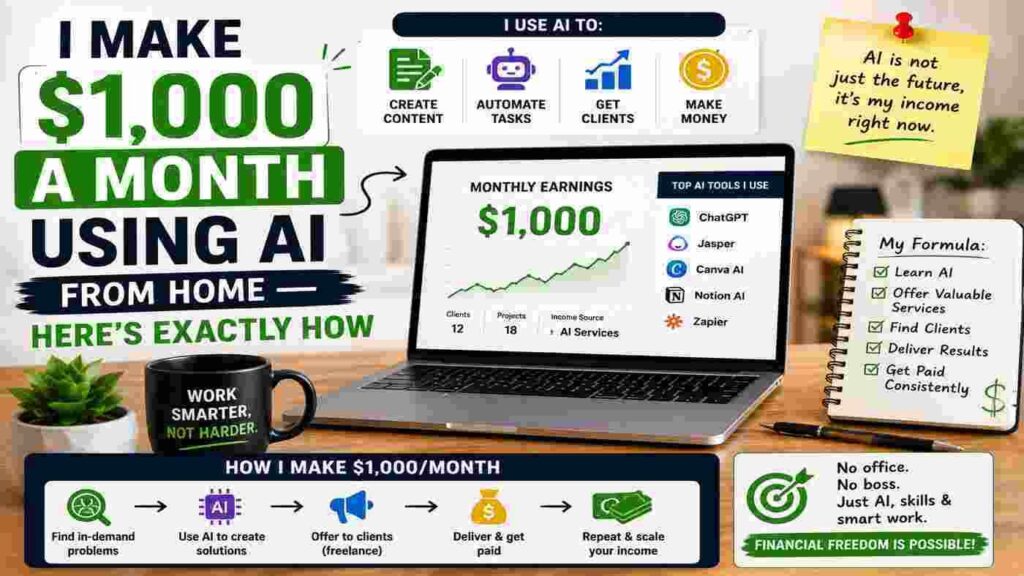
When I first heard people say they were making $1,000 a month using AI from home, I laughed. It sounded like one of those fake ads you see on YouTube — the ones with a guy standing in front of a rented Ferrari talking about “passive income.”
But then something changed my mind.
A friend of mine — a school teacher with zero tech background — casually told me she was making over $1,200 a month doing writing and content work using AI tools. No fancy degree. No big social media following. Just her laptop, a few free tools, and a simple system she figured out over a couple of months.
That got me curious. So I decided to try it myself.
I spent the next few weeks experimenting. I made mistakes. I wasted time on things that went nowhere. I got frustrated more than once. But slowly, I figured out what actually works — and what’s just hype.
This article is everything I wish someone had told me before I started.
What People Get Wrong About AI Side Hustles
The biggest mistake beginners make is thinking AI will do all the work for them.
They imagine typing one sentence into ChatGPT and getting paid. That’s not how it works. The people making real, consistent money with AI are using it as a tool — not a replacement for their brain.
Think of it this way. AI is like having a very fast helper who can write, research, and create things quickly. But that helper still needs you to give clear instructions, check the work, fix mistakes, and make sure everything sounds right.
You are the boss. AI is your assistant.
Once I understood that, everything changed. I stopped trying to let AI do everything and started using it to work faster and take on more clients than I could handle before.
The 4 Best Ways to Make $1,000/Month Using AI
After trying many different approaches, here are the four that actually work — especially if you are just starting out.
1. Writing Blog Articles and Website Content for Businesses
This is the fastest way to make your first few hundred dollars.
Every business needs content — blog posts, website pages, product descriptions, email newsletters. Most small business owners don’t have time to write these themselves. And hiring a full-time writer is too expensive for them.
That’s where you come in.
Here’s the simple process I use:
- The client tells me what they need — a blog post, a product page, whatever
- I ask a few questions to understand their business and their audience
- I use Claude or ChatGPT to create a rough first draft
- I rewrite it, fix the tone, add real examples, and make it sound human
- I do a final check with Grammarly and send it to the client
Beginners can charge $75 to $100 per article. Once you have some experience and a few good samples, you can charge $150 or more.
With AI helping, I can write 3 to 4 articles in a day that would have taken me a full week before. That means more clients, more money, same amount of time.
Where to find clients: Upwork is a great starting point. You can also check the ProBlogger job board, post on LinkedIn, or simply email local businesses directly.
2. Managing Social Media for Small Businesses
Here is something most people don’t realize — small business owners are overwhelmed.
They know they need to post regularly on Instagram or Facebook. They know it helps their business. But between running everything else, social media always gets ignored.
You can solve that problem for them.
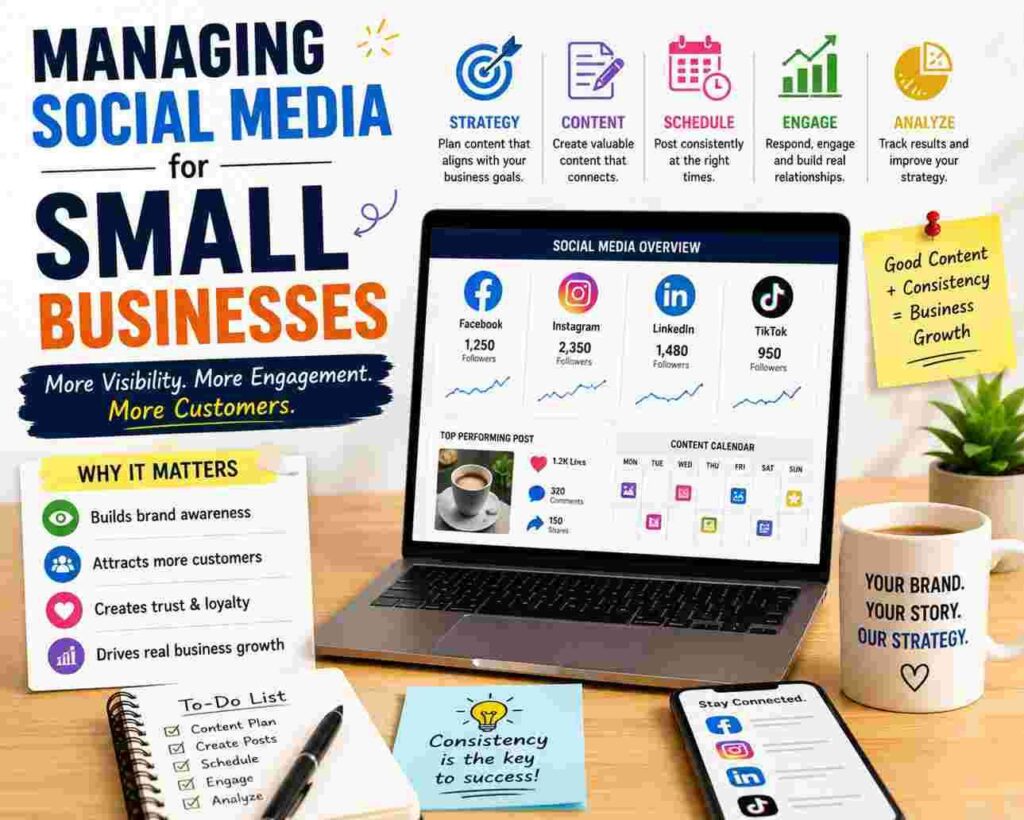
Offer a simple monthly package — for example, 20 posts per month across two platforms for $300 to $500. You use Canva to design the images, ChatGPT or Claude to write the captions, and Buffer or Later to schedule everything in advance.
Once you get your system set up, managing one client takes maybe 4 to 5 hours a month. With three clients, you are already at $1,000+ per month.
I found my first client by sending a simple direct message to a local restaurant on Instagram. I told them I noticed their posting had slowed down and asked if they would be open to a quick chat. They replied the same day. By the end of that week, they were paying me $300 a month.
It really can be that simple. Most business owners just need someone to ask.
3. Writing Resumes and LinkedIn Profiles
This one surprised me — people pay really well for this service.
A solid resume rewrite can go for $100 to $300 depending on the person’s career level. Senior professionals often pay even more. And LinkedIn profile rewrites go for $75 to $150 on their own.
The process is straightforward. The client shares their old resume and some notes about where they want to go in their career. You put that information into AI, generate a clean professional draft, and then go through it carefully — removing anything that sounds robotic, improving the language, and making sure it tells a real story about that person.
The human editing step is what clients are actually paying for. Anyone can get a basic AI resume. They are paying you to make it genuinely good.
You can find clients for this on Fiverr, LinkedIn, or by posting in Facebook groups for job seekers and career changers.
4. Creating and Selling Digital Products
This one takes more effort upfront, but it can earn you money for months without any extra work.
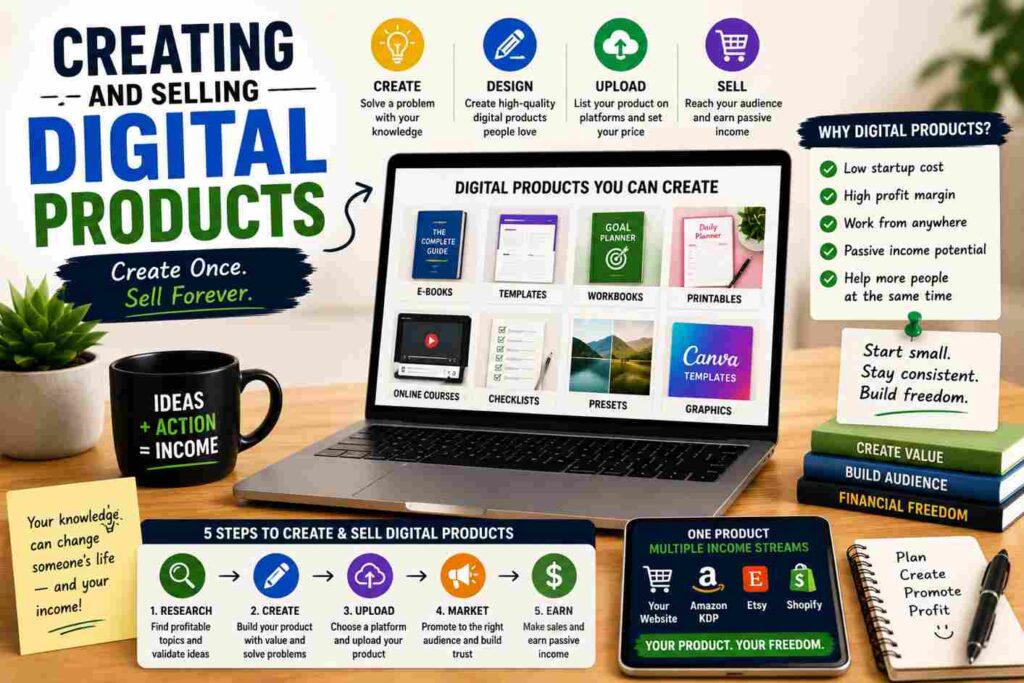
The idea is simple — create something useful, put it up for sale on a platform like Gumroad, Payhip, or Etsy, and let it sell on its own.
Some examples that sell well: a pack of ChatGPT prompts for a specific niche, a social media caption template pack, a beginner’s guide to using AI for small business, or a content calendar template.
A friend of mine created a pack of 50 ChatGPT prompts for small business marketing. She spent about two weekends on it and priced it at $12. She has sold over 200 copies without doing anything else. That is $2,400 from one product she made once.
The catch is that products do not sell by themselves in the beginning. You need some way to bring people to your product — even a simple Pinterest post or a short blog article can start driving sales over time.
What I Tried That Didn’t Work
I want to save you from wasting time on the same things I tried.
AI-generated online stores. I tried building a product store with AI-written descriptions. It looked good on paper but the competition is brutal and the profit margins are almost nothing. Not worth it when you are just starting.
Selling raw AI output. I made this mistake early on. I tried sending clients writing that I had barely edited. They noticed immediately. Unedited AI writing sounds flat and obvious. Always add your own voice and judgment on top.
Automating everything before getting one client. I spent two full weeks building complicated workflows with Zapier and other tools before I had made a single rupee. Total waste of time. Get your first client first. Automate later when you actually need to.
A Simple Plan to Reach $1,000 a Month
You do not need ten clients or twenty services. Here is a clean, realistic breakdown:
| Service | Rate | Volume | Monthly Total |
|---|---|---|---|
| Blog articles | $100 each | 4 articles | $400 |
| Social media management | $300/month | 2 clients | $600 |
| Total | $1,000 |
Two social media clients and four articles a month. That’s it. Most people can reach this within 60 to 90 days of consistent effort.
Tools You Actually Need
Use these:
- Claude or ChatGPT — For writing, brainstorming, and drafting
- Canva — For graphics and social media images. The free version is good enough.
- Grammarly — Catches small mistakes before your clients do
- Buffer or Later — For scheduling social media posts in advance
- Notion — For keeping track of clients, deadlines, and content
Skip these for now:
- Expensive AI writing platforms that charge $100 a month or more. You do not need them to start.
- Any tool that promises to “automatically create viral content.” They never work the way they claim.
The Mindset That Makes This Work
Here is the shift that made the biggest difference for me.
I stopped saying “I use AI to make content” and started saying “I help businesses grow their online presence.” AI is just how I work efficiently in the background.
Clients do not want to buy AI output. They want to hire someone they trust, someone who shows up, communicates well, and makes their life easier. That is what you are selling. The AI just helps you deliver it faster.

The Scary Part Nobody Talks About
Learning the tools is not the hard part. Using AI is not the hard part.
The hard part is reaching out to your first potential client.
I spent three full days overthinking a two-sentence email to a local bakery. Three days. For two sentences.
Eventually I just sent it. They did not reply. But the next business I messaged became my first paying client.
Most people never even get to that first message. They keep learning, keep preparing, keep waiting for the “right time.” The right time is now.
Send the message. Make the offer. Start small. The first $1,000 is the hardest. After that, it really does get easier.
Already trying any of these? Drop a comment and share what’s working for you. We’re all figuring this out together.