Introduction
There was a point last year where I had solid skills, a decent portfolio, and absolutely no idea why my inbox stayed quiet. I was sending proposals on Upwork, posting on LinkedIn twice a week, and occasionally cold emailing businesses I found on Google. Nothing was really clicking.
Then a freelancer friend told me she’d started using AI not just for her actual work, but for the client-getting process itself — the outreach, the positioning, the follow-ups. She went from two clients to six in about ten weeks.
I was skeptical but desperate enough to try it. What followed was genuinely one of the bigger shifts in how I run my freelance business. Not because AI found clients for me — it didn’t — but because it removed almost every friction point that was slowing me down.
Here’s what I learned, what worked, and what was a complete waste of time.
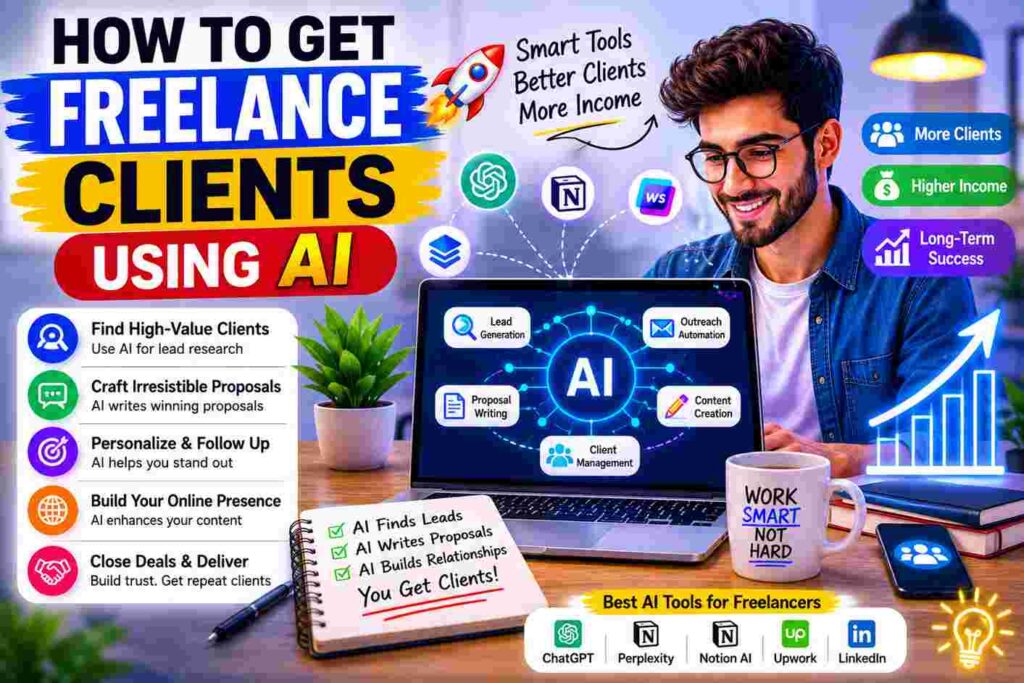
The Real Problem With Getting Freelance Clients
Before getting into the AI part, it’s worth naming the actual problem.
Most freelancers don’t struggle with skill. The real struggle is consistency and volume. Getting clients requires sending a lot of outreach, writing a lot of proposals, following up persistently, and keeping your presence visible — all while also doing the actual paid work. It’s exhausting and most people give up too early.
AI doesn’t replace the effort. What it does is cut the time each of those tasks takes so you can actually do them consistently without burning out.
1. Writing Proposals That Don’t Sound Like Everyone Else’s
If you’ve ever spent 45 minutes writing a proposal on Upwork only to hear nothing back, you already know this pain.
The problem is that most proposals follow the same template. “Hi, I saw your job post and I think I’d be a great fit. I have X years of experience in Y. Here are my portfolio links.” Clients read fifty of those and remember none of them.
AI helps you break that pattern fast.
My process now: I paste the job description into Claude and ask it to identify the three most specific problems the client is trying to solve — not the surface-level task but the actual underlying need. Then I ask it to draft a proposal opener that speaks directly to those problems before mentioning anything about me.
The difference in response rates was noticeable within the first week. When a client posts about needing a blog writer for their SaaS tool, they don’t want to read about your five years of experience. What they want is to feel like you immediately understood their situation.
AI helps you get to that understanding faster and articulate it more clearly than most people can off the top of their head.
Practical step: Next time you write a proposal, paste the job description into ChatGPT or Claude and ask: “What is the client most worried about with this project? What outcome do they really want?” Use that insight to lead your proposal. Write the first two sentences yourself based on that insight — don’t just paste what AI gives you.
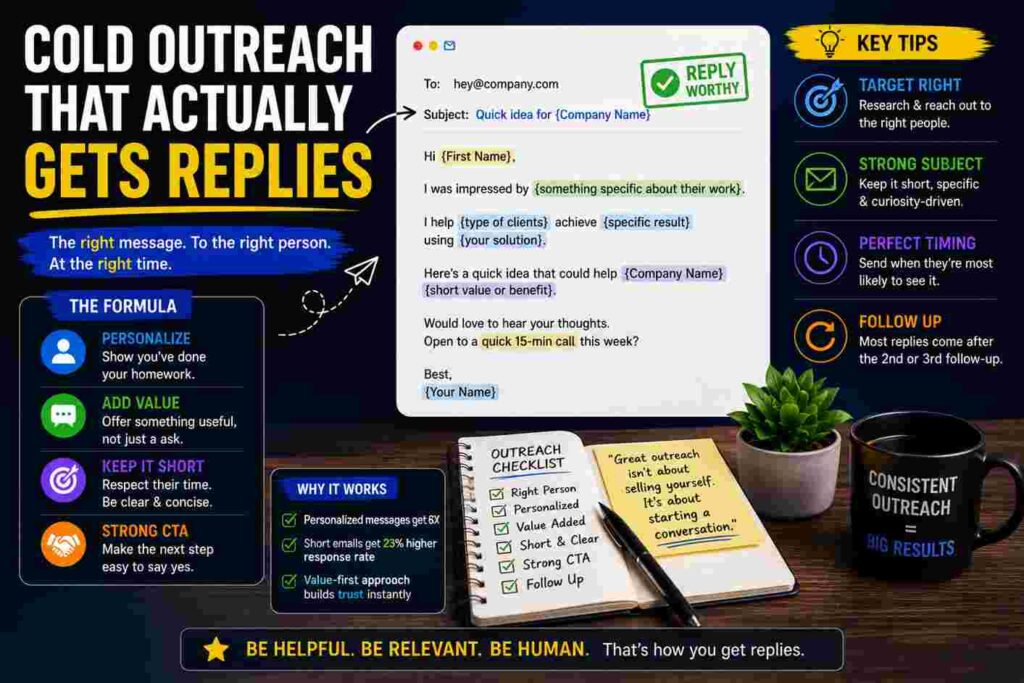
2. Cold Outreach That Actually Gets Replies
Cold outreach has a reputation for being awkward and ineffective. Usually because it is. Most cold emails are too long, too generic, and too focused on the sender instead of the recipient.
AI makes it much easier to write short, relevant, personalized outreach at scale.
Here’s how I approach it. I identify 20 businesses in my target niche — let’s say e-commerce brands on Shopify between $1M and $10M revenue. Each one gets about 5 minutes of my attention. I check their blog, their social media, their product pages. The goal is one specific, genuine observation — something they’re doing well, something that seems like a gap, or something I find genuinely interesting about their business.
Then I give Claude that observation plus a one-line description of what I do and ask for a three-sentence cold email that leads with the observation and ends with a low-commitment question. Not “would you like to hop on a call” — something easier to say yes to, like “would it be useful if I put together a quick example of what this could look like for your brand?”
These emails take me about 8 minutes each instead of 30. Because they’re built around a real observation rather than a generic pitch, they feel personal even though AI drafted them.
The key thing: you still have to do the research. AI writes the email. You provide the specific human observation that makes it not sound like spam.
Tools worth trying: Claude and ChatGPT for drafting. Apollo.io or Hunter.io for finding contact emails. LinkedIn for research before outreach.
3. Optimizing Your LinkedIn Profile and Content
A lot of freelancers treat LinkedIn as a passive thing — you set up a profile, occasionally post, and hope someone notices. That approach worked better a few years ago. Now you have to be more intentional.
Getting your profile right
Most freelancer LinkedIn profiles read like a resume — a list of jobs and skills with no clear message. Clients who land on your profile should immediately understand who you help, what problem you solve, and why you’re different. Ask Claude to rewrite your headline and summary based on your target client and the specific outcome you deliver.
The difference between “Freelance Copywriter | Content Strategy | B2B SaaS” and a headline that speaks directly to a client’s desired result is significant. Five minutes of AI-assisted rewriting can change how your entire profile reads.
Staying consistent with content
Posting regularly on LinkedIn builds visibility and trust over time. But sitting down to write posts from scratch three times a week is mentally draining when you’re also doing client work.
My current workflow: I keep a running note on my phone of interesting things I observe, questions clients ask me, and small lessons from my work. Once a week, 20 minutes with Claude turns those rough notes into three polished LinkedIn posts. Heavy editing still happens — they need my voice, my specific examples, my personality. But the blank page problem disappears entirely.
Consistency on LinkedIn matters more than any single viral post. AI makes that consistency sustainable.
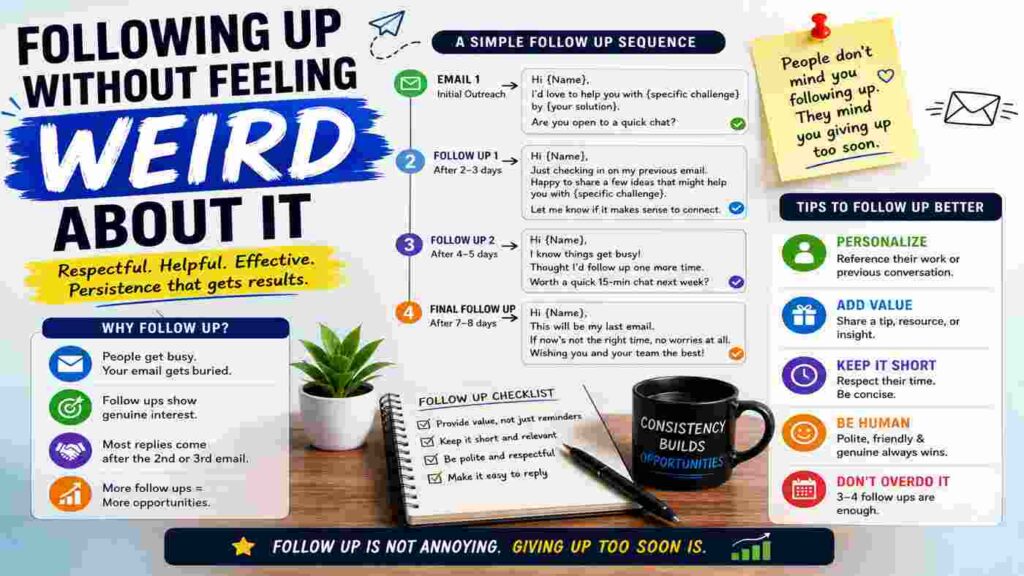
4. Following Up Without Feeling Weird About It
Ask any experienced freelancer what single habit made the biggest difference in getting clients and most of them will say follow-up. Most people send one message and give up when they hear nothing. The reality is that a lot of business happens on the second, third, or even fifth follow-up.
The reason people don’t follow up isn’t laziness. Writing a follow-up message feels genuinely awkward. Nobody wants to seem desperate or annoying.
AI makes follow-up messages much easier to write because you can describe the situation and ask for a tone that’s confident and natural rather than apologetic. Something like: “I sent a proposal two weeks ago, haven’t heard back, want to follow up without seeming pushy — draft me something short and professional.”
What comes back is usually a clean, brief message that acknowledges time has passed, restates your value in one sentence, and ends with a simple question. Takes 3 minutes to personalize and send.
Following up at least twice on every proposal is standard practice now. My close rate went up noticeably just from that one change — and AI is the reason I actually do it consistently instead of talking myself out of it.
5. Creating a Portfolio That Does the Selling for You
Getting someone to look at your portfolio is one thing. Having a portfolio that actually converts visitors into inquiries is another.
Most freelancer portfolios show work without explaining context. The work is displayed without explaining why it mattered, what problem it solved, or what result it produced. Clients don’t buy work samples — they buy confidence that you can solve their specific problem.
AI helps you reframe existing portfolio pieces into case studies. For each piece you want to showcase, give Claude the basic information — what the client needed, what you created, and any results you know about — and ask it to write a short case study paragraph. Edit it to add your voice and any specific numbers you have.
Even turning three portfolio pieces into proper mini case studies changes how potential clients perceive you. Rather than “here’s some work I’ve done,” you’re saying “here’s a problem I solved and here’s what happened.”
Tools: Notion or a simple website builder like Carrd or Contra for hosting your portfolio. Use Claude for drafting the case study write-ups.
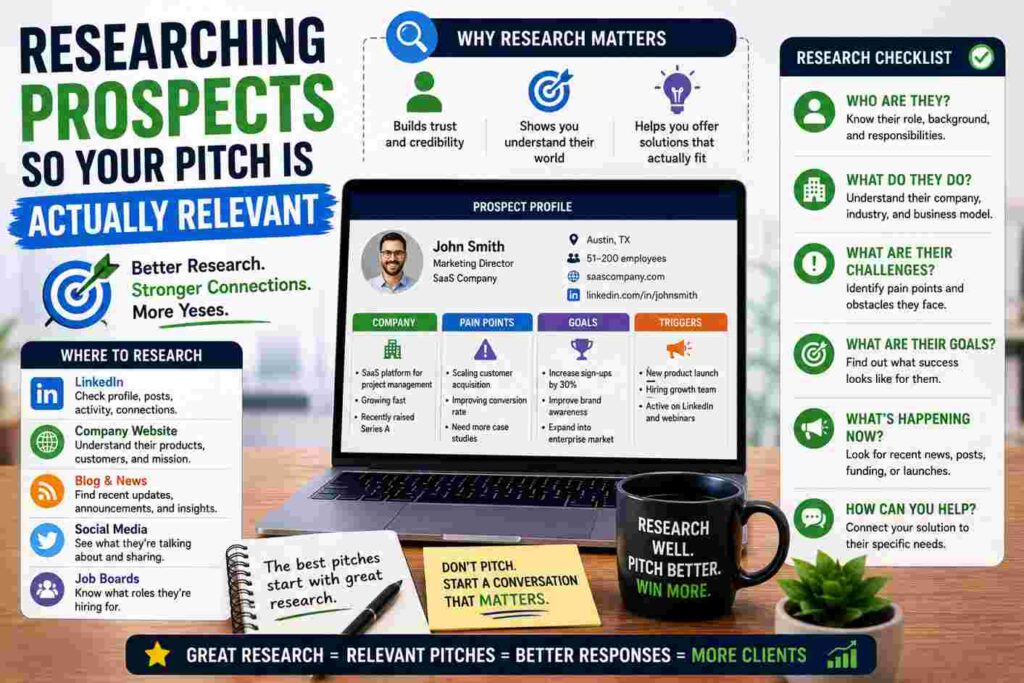
6. Researching Prospects So Your Pitch Is Actually Relevant
One thing that separates good freelancers from great ones in outreach is specificity. The more specific you are about a potential client’s situation, the more they feel understood — and the more likely they are to respond.
Perplexity AI has become genuinely useful for prospect research. Before reaching out to any company, I’ll ask Perplexity about their recent activity, their positioning, their known challenges, or how they compare to competitors. Sourced summaries come back in minutes instead of hours of manual searching.
Combined with a quick scroll of their LinkedIn page and website, a solid picture of what matters to this client comes together in about 10 minutes. That context feeds directly into my outreach message and makes it far more relevant than anything generic.
Mistakes That Cost Time and Clients
Sending AI-written outreach without personalizing it. Clients can feel the difference between a message built around them and a template with their name swapped in. AI is the engine — your research and judgment are the steering wheel. Never skip the personalization step.
Using AI to write your portfolio and letting it sound like everyone else. Your portfolio voice needs to sound like you. Use AI as a starting point then rewrite until it actually sounds like a real person wrote it — specifically, you.
Automating too much too soon. Tools exist that will send hundreds of automated cold emails on your behalf. At the early stage of building a client base, this almost always backfires. Quality and genuine personalization beat volume every single time until you have a very dialed-in message and niche.
Neglecting relationship-building. AI helps you reach more people more efficiently. What it doesn’t replace is the human side of freelancing — the conversations, the check-ins with past clients, the genuine interest in people’s work. Some of the best client referrals come from people you simply had a good email exchange with. No AI shortcut creates that.
Only using AI reactively. The freelancers getting the most out of AI for client acquisition use it proactively — building templates, drafting outreach batches, keeping content calendars full — not just scrambling when they suddenly realize the pipeline is empty.
Building a System, Not Just Using a Tool
The freelancers who consistently have full client rosters aren’t doing anything magical. A simple, repeatable system for staying visible and reaching out is what separates them from everyone else. AI makes that system significantly easier to run.
Here’s what a practical weekly client-getting routine could look like:
Monday — spend 30 minutes identifying 10 new prospects in your niche and researching them briefly.
Tuesday and Wednesday — write and send personalized outreach to those prospects using AI-assisted drafts.
Thursday — write one LinkedIn post sharing a genuine insight from your work that week. Use AI to clean it up.
Friday — follow up with anyone who hasn’t responded to outreach from two weeks ago.
That’s maybe 3 to 4 hours a week total. Done consistently over 3 months, it compounds. Most freelancers skip it because each individual piece feels like too much friction. AI removes most of that friction.
The Part That Still Has to Be You
Here’s what becomes clear after doing this for a while. AI is genuinely powerful for getting freelance clients — but only if the underlying offer is solid.
Without clarity on who you help, what specific problem you solve, and why a client should choose you over someone else, AI will just help you send unclear outreach faster. That clarity has to come from you first.
Spend real time on your positioning before worrying about outreach volume. What niche? What outcome? What makes your approach different? Once those questions have clean, confident answers, every AI-assisted message you send will land better.
The clients are out there. Most of them are confused about AI, behind on their content, unhappy with their current suppliers, or just haven’t found the right person yet. Your job is to show up consistently in the right places with a clear, relevant message.
AI helps you show up more often without exhausting yourself. That’s really the whole thing.

Pingback: I Make $1,000 a Month Using AI From Home — Here's Exactly How - pkzto.com