About eighteen months ago I was sitting at my kitchen table with a laptop, a free ChatGPT account, and exactly zero freelance experience.
I wasn’t a designer. Wasn’t a developer. Hadn’t studied marketing. My professional background was about as unrelated to online freelancing as you can get — I’d spent years working in retail management before realizing I was completely burned out and needed a different way to make money.
A friend mentioned Fiverr. I’d heard of it but assumed it was for people with actual creative skills — graphic designers, video editors, professional writers. Not for someone like me who was essentially starting from scratch.
What I didn’t realize then was that the rise of AI tools had quietly created a window for people without traditional creative backgrounds to offer genuinely valuable services. Not by faking expertise. But by learning how to use tools that most potential clients either don’t know about or don’t have time to learn themselves.
Eighteen months later I was pulling in $2,800 to $3,500 a month across Fiverr and Upwork combined. This is what that journey actually looked like.
The Honest Reality First
Before anything else let me say this clearly.
You are not going to make $10,000 in your first month. Anyone telling you that is either lying or leaving out the part where they had an existing audience, existing skills, or existing reputation that gave them a massive head start.
What you can realistically expect in the first sixty to ninety days is your first few clients, your first reviews, and maybe $200 to $500 in total earnings if you’re consistent. That’s not a failure — that’s how every freelancer starts, AI or no AI.
The people who quit say AI freelancing doesn’t work. The people who stayed past month three are now building real income. The difference is almost always patience and consistency, not talent.
Why AI Creates Real Opportunities on These Platforms
Here’s the thing most people miss about Fiverr and Upwork right now.
The majority of clients — small business owners, startup founders, busy marketing managers — know AI tools exist but have no idea how to use them effectively. They’ve tried ChatGPT once, got a mediocre result, and went back to hiring humans.
What they’re actually paying for when they hire an AI-assisted freelancer isn’t the AI output. It’s the expertise to prompt correctly, edit intelligently, and deliver something polished and usable. That gap between raw AI output and finished professional deliverable is where your value lives.
The services that sell well on these platforms right now are ones where AI dramatically speeds up the production process but human judgment is still required to make the output actually good. That sweet spot is where beginners can compete.
Services That Actually Sell for AI-Assisted Freelancers
Not every AI-powered service sells equally well. These are the ones with consistent demand and realistic entry points for beginners.
AI-Assisted Copywriting and Content Writing
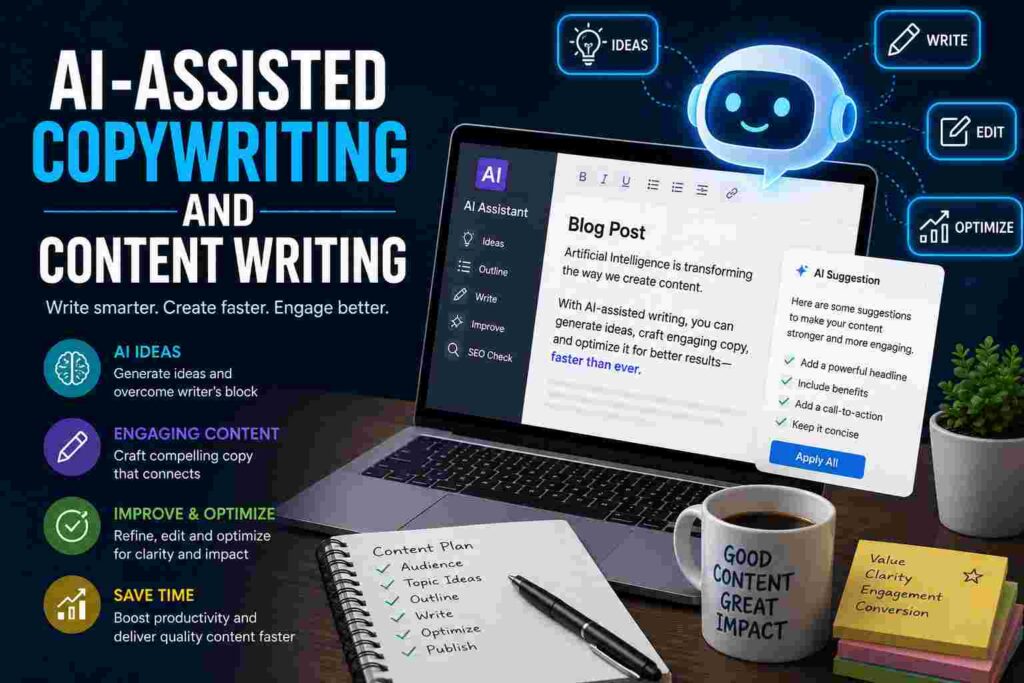
This is the most accessible starting point for most beginners. Businesses constantly need blog posts, product descriptions, email sequences, social media captions, and website copy.
The mistake beginners make is using AI to generate content and submitting it with minimal editing. Clients can tell. More importantly Google can tell, and clients who’ve been burned by thin AI content are increasingly asking for human-edited work with genuine voice and perspective.
The service that sells is not “AI writing.” It’s “research-backed content writing” where AI helps you work efficiently but your editing, restructuring, and genuine input makes the final product something a client is proud to publish.
I charged $35 for a 1,000-word blog post when I started. Within four months with good reviews I was charging $85. Within a year I was charging $150 to $180 for the same word count because my delivery, communication, and quality had become genuinely better.
AI Chatbot Setup and Automation
This one surprised me with how much demand there is. Small businesses want chatbots on their websites for customer service but have no idea how to set them up.
Tools like Tidio, ManyChat, and Chatbase make it relatively straightforward to build functional chatbots without coding knowledge. Clients pay $150 to $500 for a properly configured chatbot that handles their most common customer questions.
I learned Tidio from YouTube tutorials in about a weekend. Built a demo chatbot for an imaginary bakery to show as a portfolio piece. Got my first client within three weeks of listing the service.
AI-Powered Social Media Content Packages
Businesses need consistent social media content and most of them hate creating it.
A package of thirty social media captions for Instagram or LinkedIn, written in the client’s brand voice, researched and edited properly — that’s a service people pay $100 to $300 for regularly. With AI assistance you can deliver this in a few hours once you have your workflow dialed in.
The key differentiator is brand voice. Clients don’t just want generic captions — they want captions that sound like them. Spending time in your onboarding process understanding how a client communicates, what they care about, and what their audience responds to — that’s the human element that separates average packages from ones that get five-star reviews.
AI Image Prompt Creation and Generation
Midjourney, DALL-E, and Adobe Firefly have created demand for people who know how to write prompts that produce professional results. Many businesses want custom AI-generated illustrations, product mockups, or social media visuals but don’t know how to get the results they want from these tools.
Prompt engineering for AI image generation is a learnable skill that most people haven’t bothered to develop. A few weeks of serious practice and you can produce results that look genuinely professional.
On Fiverr this service typically sells for $30 to $150 depending on the complexity and commercial usage rights involved.
AI Video Script Writing
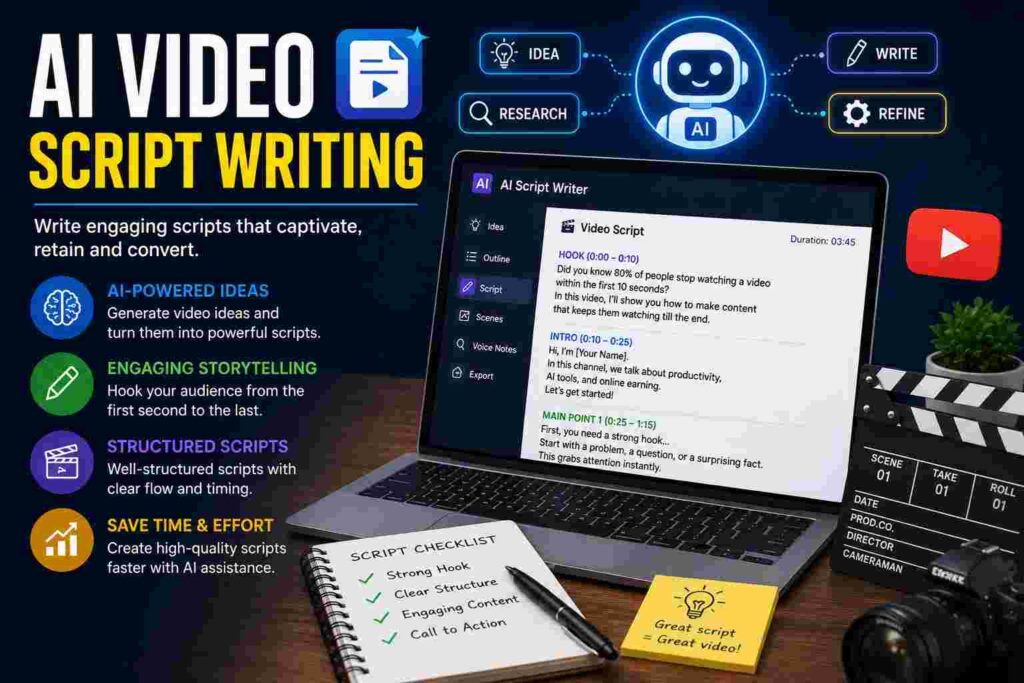
YouTube channels, corporate training videos, explainer videos — all of these need scripts. AI speeds up the drafting process significantly but good scripts still need a human who understands pacing, audience, and storytelling to be actually good.
This is a higher-skill service but also commands higher rates — $50 to $200 per script is common on both platforms once you have reviews.
Step-by-Step: How to Actually Get Started
Step 1: Pick one service and learn it properly before listing anything
The temptation is to list five different services immediately. Resist this. Pick one service that genuinely interests you, spend two to three weeks learning the tools involved through YouTube and free courses, and build two or three portfolio pieces before you create a single gig or proposal.
Portfolio pieces can be completely fictional. A sample blog post for an imaginary company. A social media package for a made-up bakery. A chatbot for a pretend dental practice. Clients want to see what you can do — they don’t check whether the portfolio client is real.
Step 2: Set up your profile properly
Your profile photo should be a real photo of you, well-lit and professional-looking. Not a logo, not an avatar. Real faces convert significantly better on both platforms.
Your bio should speak directly to what the client gets, not what you do. Instead of “I am a content writer who uses AI tools” write “I help small businesses publish consistent, well-researched content that their audience actually wants to read — delivered on time, every time.”
Use specific language. Vague profiles get skipped.
Step 3: Price lower than you want to at first
I know this is frustrating advice but it’s necessary. On Fiverr especially, your position in search results is influenced by your conversion rate — how often people who view your gig actually order. A lower price gets you those first orders and reviews faster, which improves your positioning, which gets you more visibility.
Start at a price that feels slightly too low. Get five to ten five-star reviews. Then raise your prices. This is the fastest legitimate path to competitive rates.
Step 4: On Upwork, write proposals like a human not a template
Upwork is more competitive than Fiverr because you’re actively bidding on jobs rather than waiting for people to find you. The proposals that get responses are ones that demonstrate you actually read the job posting.
First line of every proposal should reference something specific from the client’s post. Not “I am very interested in your project” — something like “The part about needing a consistent brand voice across thirty posts is exactly the kind of challenge I enjoy working through.”
Keep proposals short. Three to four paragraphs maximum. Ask one smart question at the end to open a conversation. Long proposals get skimmed and ignored.
Step 5: Overdeliver on your first five clients
These first clients are not primarily about money. They’re about reviews. Do more than you promised. Deliver early if you can. Communicate clearly throughout the project. Include a small unexpected extra — an additional caption, a second version of something, a quick suggestion they didn’t ask for.
Five-star reviews from happy early clients compound over time. They improve your search ranking, build trust with future clients, and justify higher prices. Treat your first clients like they’re worth a thousand dollars even if you’re only charging them thirty.

Step 6: Specialize as quickly as you can
The fastest path to higher rates on both platforms is becoming known for a specific thing for a specific type of client. Not “content writer” — “email sequence writer for e-commerce brands.” Not “social media manager” — “LinkedIn content creator for B2B consultants.”
Specialization feels like limiting yourself. It actually does the opposite. Specialized freelancers command higher rates, get better clients, and stand out in search results because they’re the obvious choice for a specific problem rather than one of thousands of generalists.
Mistakes That Keep Beginners Stuck
Submitting raw AI output without editing. Clients notice. Reviews suffer. Your reputation on these platforms is everything — one bad review early on sets you back significantly. Always edit, always add your own judgment, always make it better than what the AI gave you.
Copying competitor gig descriptions word for word. Both platforms flag duplicate content and it hurts your search ranking. Write your own descriptions in your own voice.
Disappearing after delivery. Following up with clients after a project is complete — asking if everything worked out, offering to make small adjustments — dramatically increases repeat business and positive reviews. Most freelancers never do this.
Taking on every type of project to make money faster. Spreading yourself across too many service types means you never get good enough at any one thing to deliver great work consistently. Focus compounds faster than diversification at the beginning.
Getting discouraged by slow first weeks. Fiverr and Upwork both have algorithms that favor established sellers. New profiles get less visibility. This is normal and temporary. Consistency in the first sixty days is what gets you through the invisible phase into real traction.
What Nobody Tells You About Competing With Established Sellers
When you look at top sellers on Fiverr or Upwork with hundreds of reviews and polished profiles, it’s easy to feel like you can’t compete. You can’t compete with them directly — and you don’t need to.
New clients on these platforms often specifically look for newer sellers with lower prices because they’re on a budget or testing a service for the first time. Your competition isn’t the seller with 500 reviews. It’s the other new sellers with zero to ten reviews who are targeting the same entry-level clients.
Beat them by having a better profile photo, a clearer service description, better portfolio samples, and faster communication response times. Those four things alone will get you chosen over most new competition.
As your reviews build, your competition shifts naturally. You start appearing in searches alongside more established sellers and your review count starts doing the selling for you.
The Compounding Effect Nobody Talks About
Here’s what eighteen months on these platforms taught me that I didn’t expect going in.
Every good client is potentially a repeat client and a referral source. Three of my best ongoing clients came from referrals from early clients I’d charged very little. One client I’d done a $45 blog post for eventually became a $600 per month retainer because I’d impressed them with that first small job and they kept coming back.
The income on these platforms doesn’t grow linearly. It compounds. Good work leads to reviews, reviews lead to visibility, visibility leads to more clients, more clients lead to specialization opportunities, specialization leads to higher rates.
The people who treat early low-paying work as worthless are missing how it feeds everything that comes after.
Start small. Do excellent work. Stay consistent longer than feels comfortable.
That’s genuinely the whole formula.
Income results vary based on individual effort, niche, platform competition, and consistency. Nothing in this article guarantees specific earnings. Freelancing involves real work and real learning curves — approach it as a skill-building process, not a shortcut.